- Procure Nerds
- Posts
- The Weekly Pull #007: Procurement Hot Takes of The Week
The Weekly Pull #007: Procurement Hot Takes of The Week
Plan Bs, Power Plays, and Procurement on Hard Mode

Ana Zvijinschi
August 18, 2025
Hello nerdy nerds,
I’m writing this week’s newsletter from one of the most amazing landscapes in Romania — Transylvania, the region even King Charles fell in love with.
It’s my 3rd consecutive year here for the Transylvania Bike Trail race (TBT). And it’s also my 3rd time not making it past the brutal 9 km climb at the start. Sun overhead, legs screaming, pride shattered.
But I work in procurement, so quitting is not an option. I’ve already booked my hotel for next year. In the meantime, I cheer my SO from the sidelines and plot revenge on that climb.
So what does failing a bike trail have to do with procurement?
It’s simple: you don’t need ten half-baked Plan Bs, you need one real alternative that actually works.
Otherwise, you’re just standing on the side of the trail cheering while someone else crosses the finish line. Don’t be like me.
I’m taking this temporary setback to focus my energy on something I know a bit more about — procurement.
So let’s see what I’ve been nerding out on this week.
What I’ve Been Nerding Out On
Plan Bs aren’t real until they’re tested.
Most backups are just Plan As in disguise — shifting countries resets costs, same-region backups share the same risks, and emergency sourcing burns margin. A real Plan B? Signed contracts, tooling ready, stress-tested before the storm hits.
👉 Check out my full post on this for the breakdown.
Supplier power is still brutal.
In cloud, critical components, and niche services, consolidation means fewer options and obscene leverage. Renewals aren’t polite 3% hikes anymore — they’re 15–40%. If you walk in without alternatives, benchmarks, and the guts to walk away, you’ve already lost the negotiation.👉 Get my Renewal Prep Checklist for practical tactics.
👉 Read the full mid-year review here: State of Procurement 2025When procurement and engineering clash.
Last week’s debate with a senior engineer reminded me of this: quality tanks when one side runs solo. The fix?
Bring engineering in early for specs, testing, and quality control.
Let procurement shape the commercial guardrails — contracts, cost, risk.
Lock decisions in together, so neither specs nor budgets are weaponized later.
👉 My full take here: Procurement vs Engineering
That’s what’s been rattling around in my head this week.
But procurement isn’t just about debates and playbooks — it’s also about keeping pace with what’s happening out there, right now.
So, what just happened in procurement this week?
Signals This Week - What just Happened:
#1 – Europe rethinks digital sovereignty.
Source: Carnegie Endowment
The EU is shifting its digital policy focus — from raw “tech sovereignty” (just building European alternatives) toward “tech citizenship,” which mixes regulation, accountability, and citizen rights.
That means future procurement rules could weigh not only origin, but also ethics, transparency, and compliance.
Why it matters:
Qualification won’t just be about where tech comes from — but how it behaves. Procurement teams will need to check more than supplier passports.
What you should do:
Audit your IT contracts for data use, privacy, and AI governance. Get ready for tenders where compliance with EU values matters as much as cost.
#2 – Global trade outlook looks shaky
Source: WTO
The WTO says trade will grow just 0.9% in 2025 — better than feared, but boosted by buyers stockpiling ahead of possible tariffs. The risk is 2026 could dip sharply if tariffs rise.
Why it matters:
Short-term stocking up hides long-term pain.
What you should do:
Run “what if” cost scenarios now. Consider buffer stock in safer hubs.
#3 – NATO procurement agency hit by fraud probe
Source: AP News
NATO’s own procurement arm is under investigation for corruption tied to military contracts in Luxembourg and Spain.
Why it matters:
Even high-level agencies can fail on oversight — suppliers may use this as cover for less transparency.
What you should do:
Tighten anti-corruption clauses. Rotate auditors. Don’t assume trust equals compliance.
The Bottom Line:
What It Means to You
If this week had a theme, it’s this:
The safety nets are thin — and the rules aren’t waiting for you to catch up.
Europe isn’t just asking where your tech is built — it wants to know how it behaves.
Global trade looks steady on the surface — but only because buyers are panic-stocking.
And NATO’s procurement arm? Even the “professionals” are stumbling on oversight.
So here’s what it means for us, the buyers in the trenches:
Compliance is no longer a checkbox — it’s ethics, data use, and governance all rolled in.
Stockpiles hide risk, they don’t erase it. Plan beyond 2025 or eat the 2026 pain.
If NATO can miss fraud signals, you sure can too. Rotate your audits and tighten clauses.
In short?
Procurement is playing on harder mode: ethical, political, and exposed.
If you’re not building resilience now, you’re gambling that your suppliers are more honest and stable than the headlines suggest.
Stay paranoid, stay nerdy.
IN CASE YOU MISSED IT…
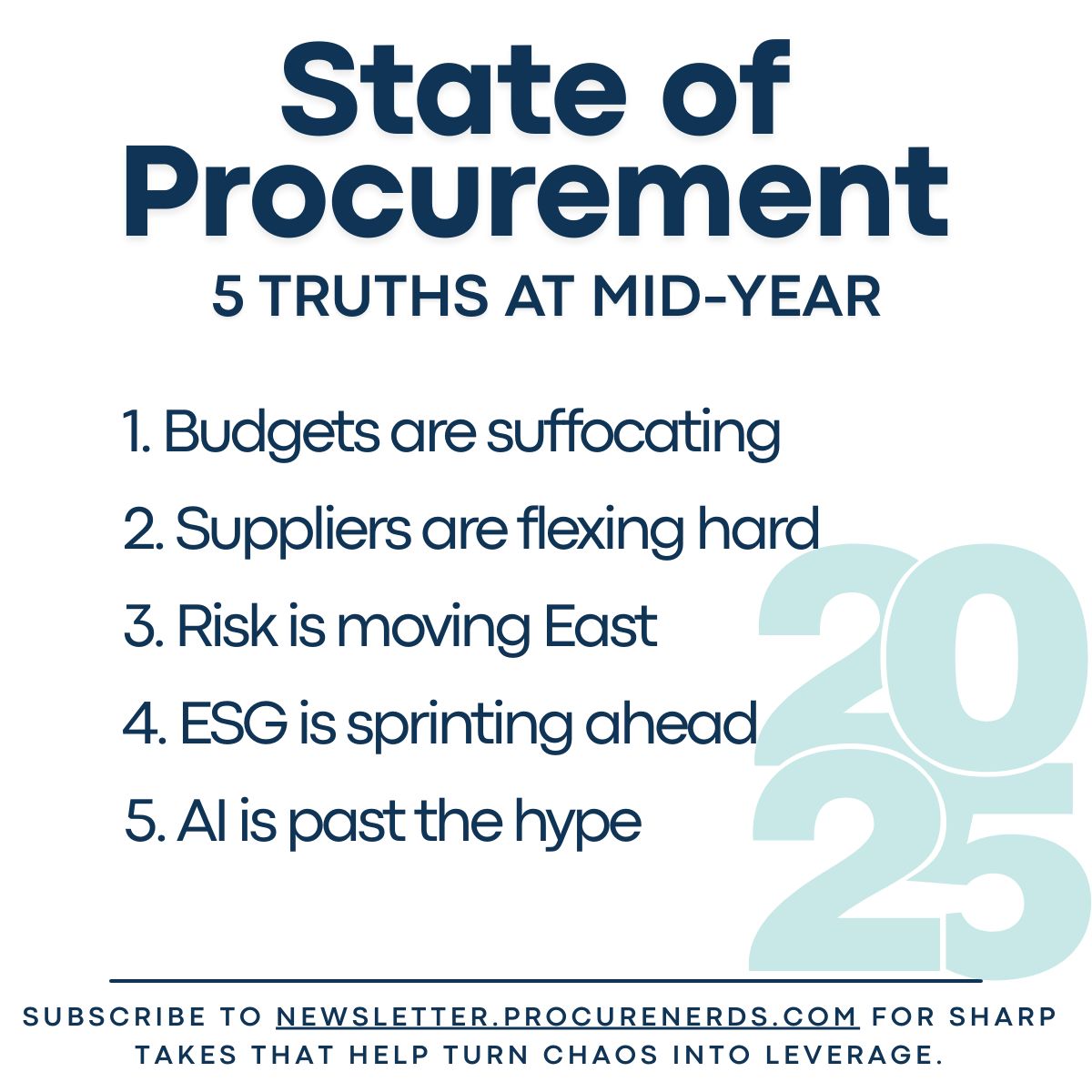 State of Procurement 2025 - Mid-Year ReviewPersonal take on what’s shaping Procurement in 2025 | 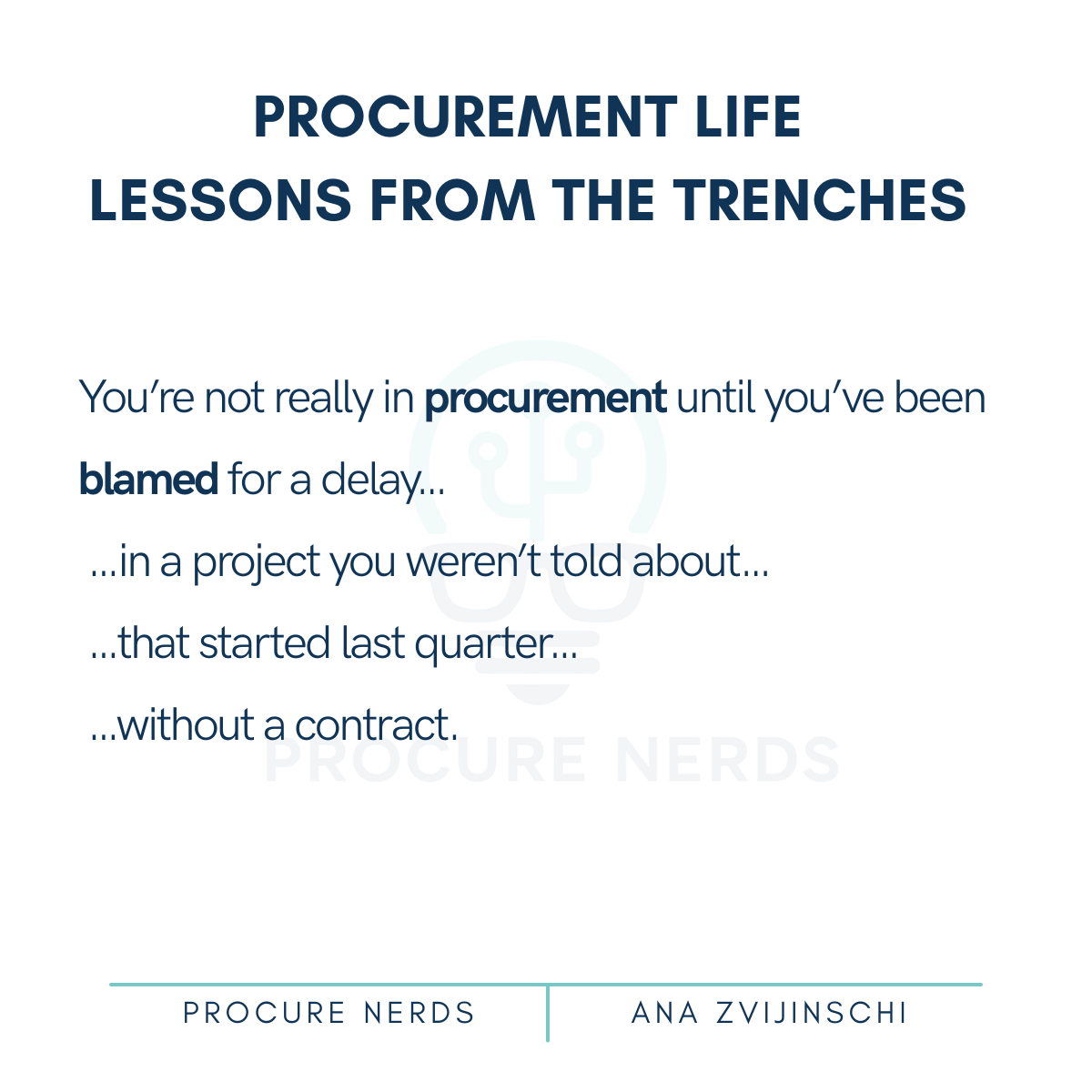 My weekly procurement lessonsThis week - the never ending blame game and how i FAILED one of my projects |
Until next time,
Zvi